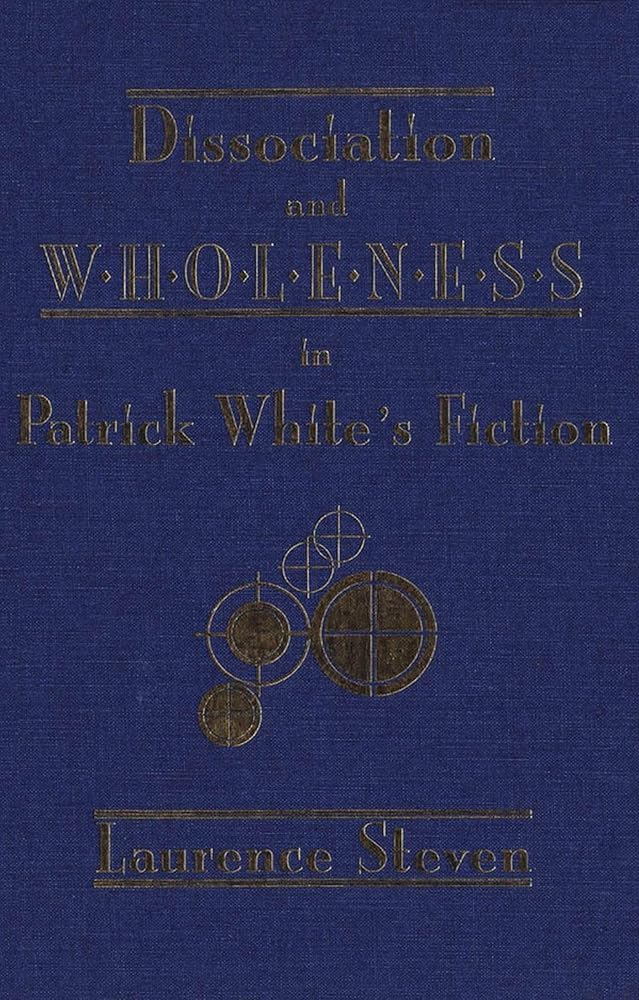

Condition: Excellent
Laurence Steven
Dissociation and Wholeness in Patrick White’s Fiction
Dissociation and Wholeness in Patrick White’s Fiction
Couldn't load pickup availability
Most studies of Patrick White's fiction are devoted to elucidating archetypal patterns, symbolic configurations, and thematic preoccupations, and generally to praising the way White's fictional elements combine to form a religio-mystical worldview.
Few have questioned this critical approach to White; fewer still have questioned White's vision itself. Yet, according to the author, questioning is in order―for Patrick White is a man divided. One part of him strives for permanence, for the ideal, in a world he knows is contingent and temporal, a world that will undermine his striving. This leads him as a novelist to devalue human life and to impose arbitrary, symbolic resolutions on his novels. This has been the focus of most critics. But there is another side, a part of White that strains away from the dualism of idealism versus despair and towards a vital wholeness that can be found, not in a world beyond the one we live in, but in human relationships. It is this side of Patrick White, argues Laurence Steven, that is the source of his genuine power as a novelist.
An important challenge for the critic is "to develop an ability to see, within the restrictive compass [White's] symbolic designs impose on the novels, 'the new shoots,' as [D. H.] Lawrence would have it, which indicate new life, new creativity, and which point towards a wholeness which human beings can embrace as their own" (Introduction).
Share
Published: 1989
Binding: Hardcover
ISBN: 0889209596
View full details